
Big Feelings, Small Bodies: Helping Your Preschooler Name Emotions
If your three-year-old has ever dropped to the floor in the cereal aisle, or burst into tears because their sock felt wrong, you already know: tantrums and meltdowns are the number one worry parents bring us about this age. And for good reason. Preschoolers are living through enormous emotions with a brain that is still years away from being able to manage them. The good news is that you don't need to stop the big feelings. You just need a few simple tools to help your child move through them.
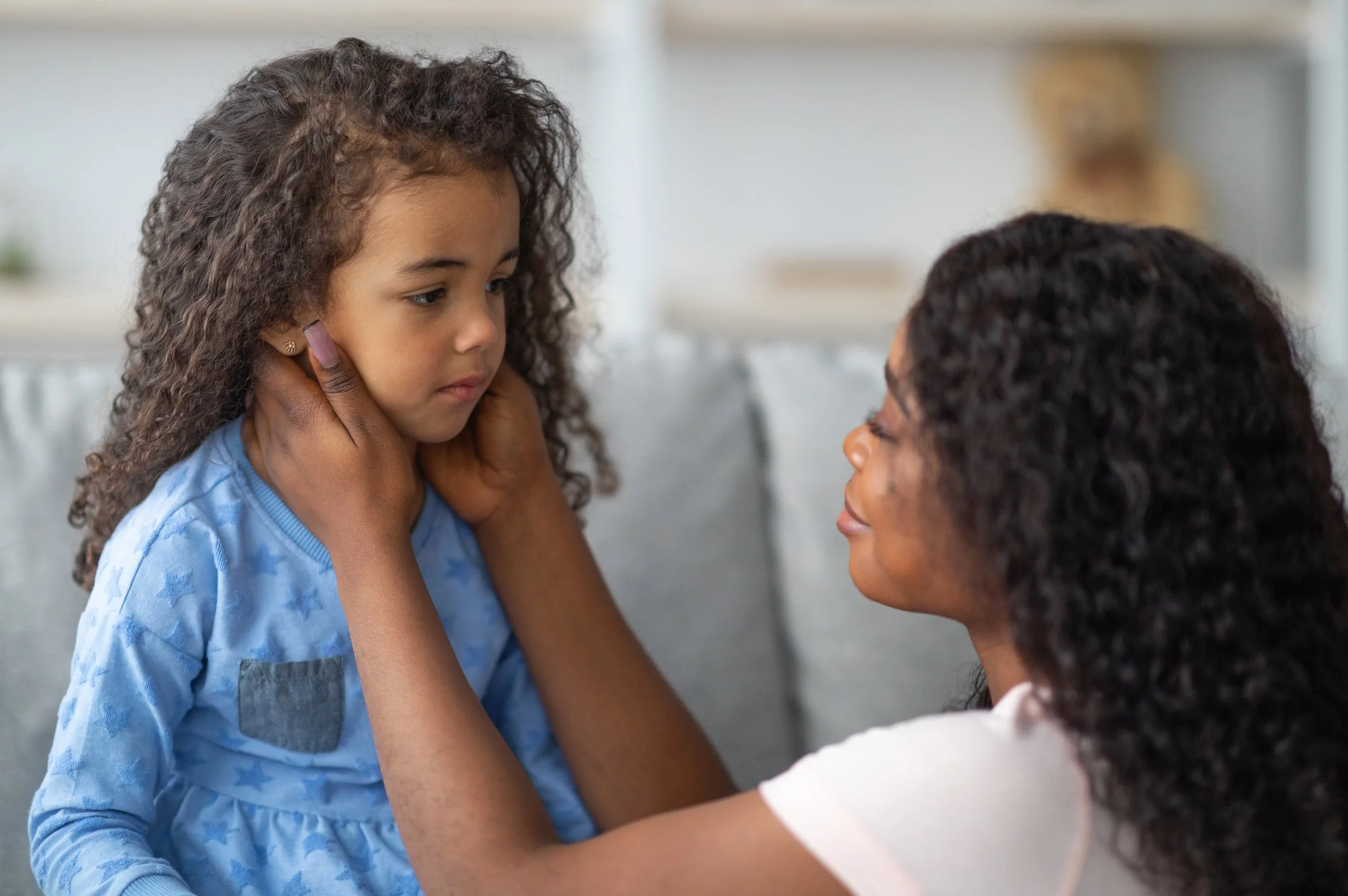
Why Naming the Feeling Matters
At this age, children feel an emotion in their whole body before they have a word for it. That gap between sensation and language is often what turns a disappointment into a full meltdown. When a grown-up puts a name to what's happening ("You're frustrated" or "You're so disappointed right now"), it does two things: it tells your child they're understood, and it starts building the vocabulary they'll eventually use to calm themselves down without an adult's help. This is the heart of social-emotional development, and it's a skill, just like counting or sharing. It gets stronger with practice.
A Few Phrases to Try
A handful of short, calm phrases go a long way in the moment:
"You're frustrated. Let's take three big breaths."
"That was hard. I'm right here with you."
"Your body is telling me you're angry. Angry is okay. Hitting is not."
"You wanted five more minutes and we only had one. That's disappointing."
"I can see this is a lot right now. Let's find a quiet spot together."
The goal isn't to talk your child out of the feeling. It's to show them the feeling has a name, it makes sense, and it will pass.
Build a Tiny Calm-Down Corner
A small basket or a single cushion in a low-traffic corner is enough. A few things to keep in it:
A soft stuffed animal or small pillow to squeeze
A board book with calm pictures
A "glitter jar" or a small sensory bottle to shake and watch settle
A simple feelings chart with faces, so your child can point to how they feel
Frame it as a cozy spot to feel better, never as a punishment or a time-out. In our classrooms, we use a version of this corner too, so the idea of a calm-down space will already feel familiar to your child.
How This Fits Our Three-Year-Old Program
Social-emotional growth isn't an add-on in our Three-Year-Old Program. It's one of the main things we focus on, alongside early language and curiosity-driven learning. Every day, your child's teacher is doing exactly what's described above: naming feelings out loud, modeling calm responses, and giving children words for what they're experiencing. When home and classroom use the same approach, children pick it up faster, and the habit of naming a feeling instead of acting it out starts to stick.
A Skill Worth the Patience
Big feelings in small bodies aren't a behavior problem to fix. They're a skill still under construction, and every calm moment you offer is a brick in that foundation. You won't get it right every time, and that's fine. Your child doesn't need a perfect response. They need a steady one.
Want to see how we support social-emotional growth in the classroom every day? Schedule a tour or explore our Three-Year-Old Program.